Serving Lancaster, CA and surrounding areas. (661) 952-4269
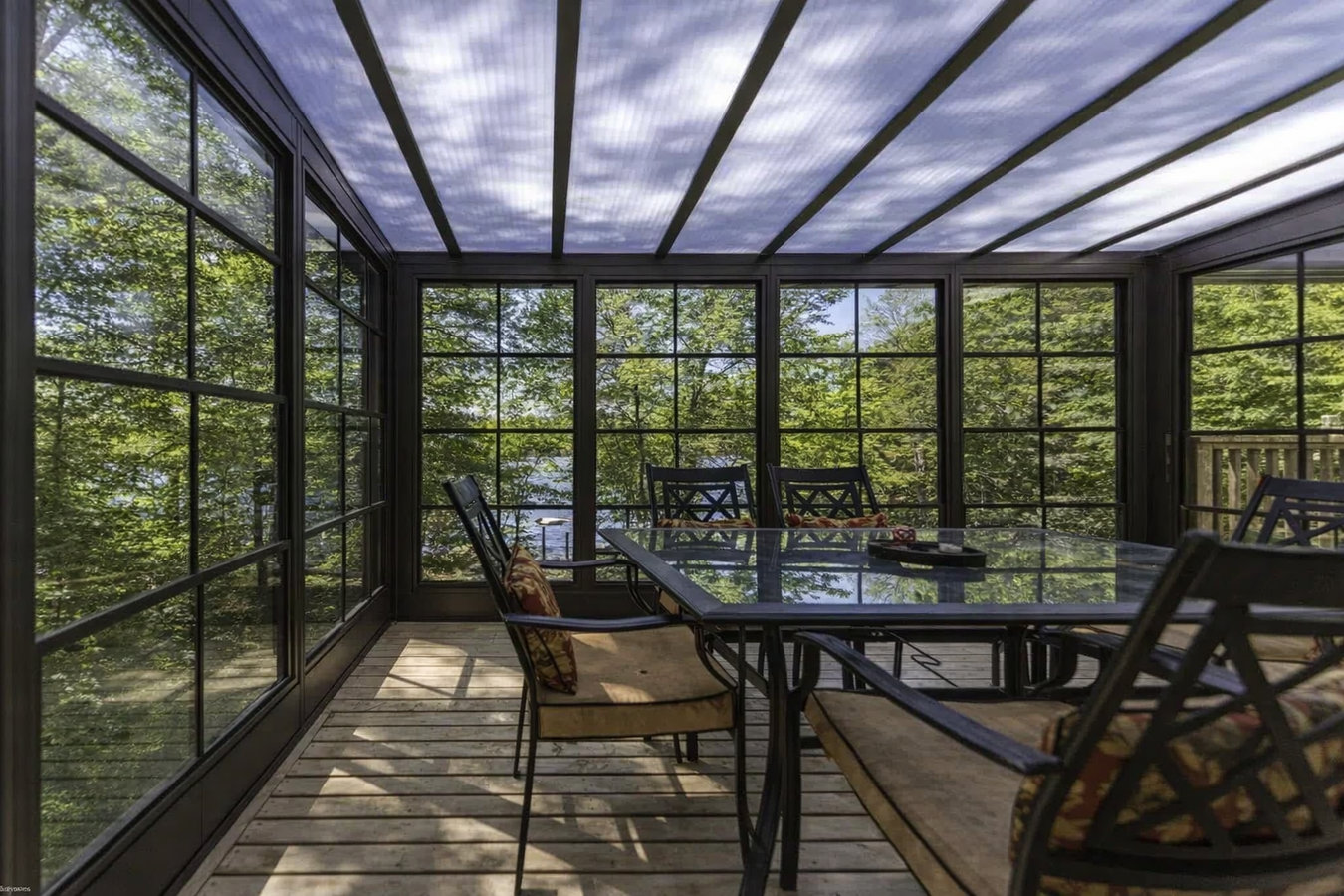
Your covered patio is not cutting it in July. A permitted vinyl sunroom gives you an enclosed, climate-ready space that works year-round and does not need repainting or refinishing every few years.
Vinyl sunrooms in Lancaster, CA are enclosed room additions built with vinyl-framed walls and a roof system designed to let in natural light while blocking heat, most residential installations take one to three weeks of on-site work once permits are approved.
Vinyl became the preferred framing material for sunrooms here for a straightforward reason: it does not rust, rot, or need repainting the way aluminum or wood can, and it handles the temperature swings and UV intensity that Lancaster delivers year after year. An open patio or a basic patio cover still leaves you fighting the heat in summer and the dust and wind the rest of the year. A properly built vinyl sunroom seals all of that out. You get the light and the view of your yard without the discomfort that makes outdoor spaces in this climate so frustrating to actually use.
If you are comparing materials or room types, a sunroom addition covers the broader category - vinyl is the framing choice that makes the most sense for this climate, and it starts with the same design and permit process as any other enclosed room.
If you stop going outside from May through September because Lancaster's heat is simply too intense, a vinyl sunroom with proper climate control gives you that space back. An air-conditioned, enclosed room means you can enjoy the view of your yard on a 105-degree afternoon without being baked by it. If your patio furniture sits unused for four months every year, that is the clearest possible signal.
Lancaster's spring winds carry fine Mojave dust into every open corner. If you are constantly wiping down furniture or have stopped using your covered patio altogether because of the grit, an enclosed vinyl sunroom solves the problem entirely. The room seals out the wind and dust while keeping the light - and you can actually leave furniture out without it being coated two days later.
If your family needs a dedicated space for a home office, a playroom, or a place to entertain, a vinyl sunroom is one of the most practical ways to add livable square footage without a full structural addition. Unlike a garage conversion or a second-story build, a sunroom can often be completed in a few weeks at a fraction of the cost. If you love your neighborhood but need more room, price this out before you decide to move.
If you have an older aluminum cover or screen enclosure that is sagging, rusting, or letting in insects and dust, it may be time to replace it with something more substantial. Many Lancaster homeowners find that upgrading from a tired patio cover to a proper vinyl sunroom costs less than expected and delivers a dramatically better result. If the current structure embarrasses you when guests visit, that is a good time to get quotes.
We build vinyl sunrooms designed specifically for the Antelope Valley - engineered for local wind loads, set on foundations appropriate for the area's caliche soil, and permitted through the City of Lancaster before any work begins. We do not use a one-size-fits-all kit and adapt it to your yard. We start with the design consultation, confirm what your home and your HOA require, and build from there. For homeowners who want a straightforward enclosed room that is comfortable in all seasons, a four-season vinyl build connected to your home's HVAC system is the right path - and it starts with the same sunroom addition planning process we use for every project.
For homeowners who want a lighter commitment - primarily spring, summer, and fall use - a three-season vinyl room offers a lower-cost entry point that still beats an open patio or patio cover in terms of comfort and dust control. In Lancaster, where winters are mild and the real challenge is managing summer heat, many homeowners find that a well-designed three-season room serves them almost as well as a four-season build. Either option starts with an honest conversation about how you plan to use the space. We also work with homeowners who are thinking ahead toward a three-season sunroom now with the intention of fully conditioning the room later - and we can design the initial build so that upgrade is straightforward when you are ready.
Suits homeowners who want a fully conditioned room that functions year-round - insulated walls and ceiling, connected to your home's HVAC, and comfortable even on Lancaster's hottest days.
Suits homeowners who primarily want spring-through-fall use at a lower cost - a good fit for Lancaster's mild winters, where the main goal is managing summer heat rather than cold.
Suits homeowners who want maximum heat rejection without sacrificing natural light - low-emissivity glass blocks a significant portion of solar heat while keeping the room bright and open.
Suits homeowners who want ceiling fans, lighting, or an outlet plan built in from the start - adding electrical during construction costs far less than retrofitting into a finished room.
Lancaster sits in the Mojave Desert at about 2,300 feet elevation, which means summer temperatures that regularly top 100 degrees F, spring winds that can gust past 50 mph, and a soil profile that often includes a hard caliche layer just a foot or two below the surface. Standard sunroom specifications that work on the coast will not hold up here. Glass panels without a heat-blocking coating turn the room into an oven by July. Frames not engineered for local wind loads rattle and leak within a few seasons. Foundations not accounting for caliche can shift and crack as the soil resists and then gives way over time. None of these are hypotheticals - they are common failure points in sunrooms built by contractors without Antelope Valley experience. The Antelope Valley Air Quality Management District also notes that this region carries significant airborne particulate, which means seal quality is not a minor detail - it is what keeps the room clean and comfortable over the long run.
Homeowners throughout Lancaster and out toward Palmdale face the same desert conditions, and we build every vinyl sunroom to the same standard - desert-rated glazing, wind-load-engineered framing, and foundations assessed for local soil before the first shovel goes in. If your neighborhood has an HOA, we prepare the architectural review submission alongside the city permit application so both approvals move forward at the same time.
We reply within one business day to schedule a free on-site visit. During the visit we measure the space, review your existing slab or foundation, and assess any HOA setback requirements or soil conditions that affect the design. You get a written proposal with a fixed price within a week or two.
Before any work begins, we submit the permit application to Lancaster's Building and Safety Division on your behalf. If your neighborhood has an HOA, we prepare the architectural drawings the board requires at the same time. This step typically takes two to four weeks - do not let any contractor start work before the permit is in hand.
Once permits are approved, we prepare the foundation - either working with your existing slab or pouring a new one. In Lancaster, this step sometimes takes longer if the crew encounters a caliche layer that needs to be broken through. After the foundation sets, the vinyl frame goes up quickly, usually in a few days.
With the frame in place, the crew installs the glass or panel walls and the roof system, seals all joints, and connects any electrical or HVAC work. After the interior finishing is complete, the city inspector verifies everything was built to code. We schedule the inspection and walk you through the finished room before we leave.
We assess your space, handle the permits, and give you a written price before any work starts.
(661) 952-4269We specify low-emissivity glass panels appropriate for the Mojave Desert climate on every vinyl sunroom we build. This is not an upgrade option - it is the baseline, because a room with standard glass is unusable in Lancaster's summer. The difference in comfort between heat-rejecting and standard glass in this climate is not subtle.
We submit the permit application to Lancaster's Building and Safety Division and handle every inspection scheduling. You receive a copy of the final permit sign-off - an important document to keep with your home records when you sell. We have been through Lancaster's permit process many times and know what the city requires at each stage.
The Antelope Valley's caliche soil layer affects how foundations are dug and set, and a contractor who has not worked in this area may not account for it in their bid. We assess soil conditions during the site visit and give you an honest estimate that reflects the actual conditions of your yard - not a placeholder that becomes a change order later.
Many Lancaster neighborhoods require HOA architectural approval before any exterior addition can begin - and that review needs to happen before the city permit is even submitted. We prepare the drawings your HOA needs as part of our standard process, so both approvals move forward at the same time and nothing gets held up at the last minute.
These are the specifics that matter when you are building in the Antelope Valley, and they are the reason homeowners who have lived through a bad sunroom experience with another contractor call us for the rebuild. You can learn more about California glazing energy standards from the California Energy Commission, and you can verify any contractor's license on the California Contractors State License Board website before you sign anything.
Full sunroom additions attached to your home, covering all room types, materials, and sizes across Lancaster and the surrounding Antelope Valley.
Learn MoreSpring-through-fall enclosed rooms at a lower cost than a fully conditioned build - a practical entry point in Lancaster's mild-winter climate.
Learn MorePermit slots fill up in spring - lock in your project start date before the summer heat arrives and call or contact us today.